
 English
 русский
 日本語
日本語 Español
 Deutsch
 中文简体
中文简体Product Consultation
Your email address will not be published. Required fields are marked *




DC Gear Motors Guide: Types, Applications & Selection Tips
Jul 16,2026
Worm Gear Motor Explained: Why This Compact Powerhouse Is Used Everywhere
Jul 10,2026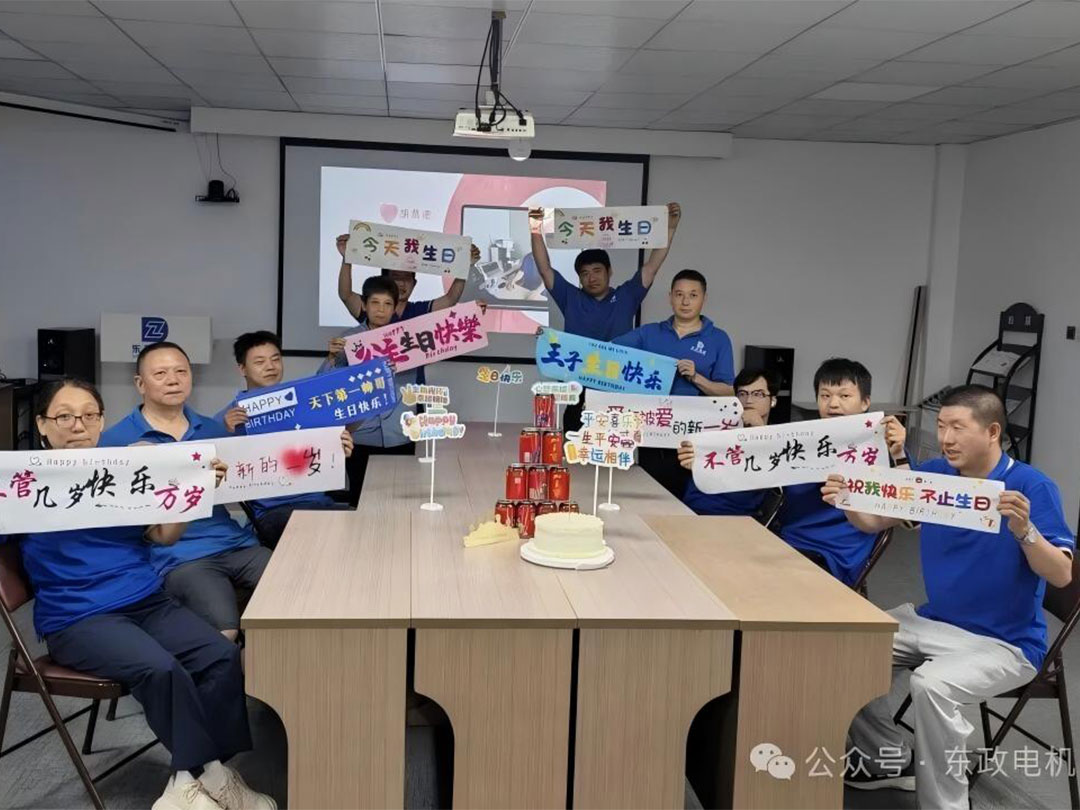
June birthday, growing towards the sun | The June employee birthday party of Dongzheng Electric Machinery came to a warm conclusion
Jun 05,2026The decision between a brushed DC motor and a brushless DC motor (BLDC) is fundamental in engineering and design. While both convert direct current (DC) electrical energy into rotational mechanical energy, the main difference lies inhowthey achieve commutation—the process of reversing the current direction in the motor windings to keep the rotor spinning.
This difference in internal design dictates everything about their performance, lifespan, maintenance, and cost. Understanding this distinction is key, particularly when dealing with specialized components like a Brushed DC Gear Motor, where the added complexity of a gearbox is layered onto the motor's inherent characteristics.
Content
In a brushed DC motor, commutation is handled mechanically. The motor's internal structure includes:
Brushes: Stationary, conductive carbon blocks that connect the power source to the rotor.
Commutator: A rotating segment of copper bars attached to the rotor's axle.
As the rotor spins, the brushes slide against the commutator segments, physically switching the direction of the current flowing into the armature windings. This continuous, friction-based switching keeps the magnetic poles aligned for rotation.
A BLDC motor, conversely, uses electronic commutation. These motors feature:
Stator (Windings): The coils are stationary, typically on the motor housing.
Rotor (Magnets): Permanent magnets are attached to the rotating axle.
Electronic Controller: An external circuit (often called a drive or ESC) is required.
The controller uses sensors (like Hall effect sensors) to track the rotor's position and electronically switches the current to the stationary windings at the precise moment. There is no physical contact involved in power transmission, eliminating mechanical wear and tear.
The choice of commutation directly leads to the following differences:

The brushed DC motor is mechanically simple to drive. It can be connected directly to a DC power source for basic operation (ON/OFF) or controlled with a simple H-bridge circuit for speed and direction changes. This inherent simplicity translates to a lower initial cost for both the motor and its associated control electronics.
For applications requiring high starting torque or lower output speed, the inclusion of a gearbox forms a Brushed DC Gear Motor. The gearbox addresses mechanical requirements, but the motor's lower efficiency and higher maintenance costs remain the primary trade-offs.
The BLDC motor has a higher initial cost due to its more complex internal construction (often involving stronger magnets). Crucially, it always requires an expensive electronic controller (ESC) to perform the necessary electronic commutation. While the motor itself may be maintenance-free, the complex drive electronics introduce a potential point of failure and increase the overall system cost and complexity.
Your email address will not be published. Required fields are marked *
Tel: +86 0579-86817938-836
Phone: +86 15258922705
E-mail: [email protected]
Add: No.2 Zengping Rd., Dongyang, Zhejiang, China
You can contact to me using this form.
Copyright © Zhejiang Dongzheng Motor Co.,Ltd. All Rights Reserved.
 DC Gear Motor Manufacturers