


 English
 русский
 日本語
日本語 Español
 Deutsch
 中文简体
中文简体Product Consultation
Your email address will not be published. Required fields are marked *




DC Gear Motors Guide: Types, Applications & Selection Tips
Jul 16,2026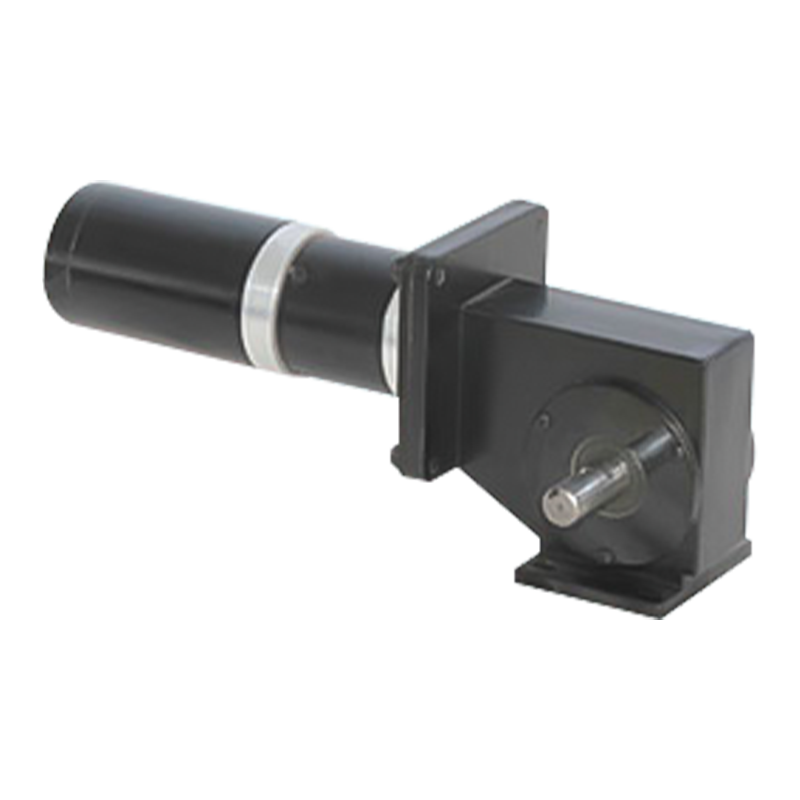
Worm Gear Motor Explained: Why This Compact Powerhouse Is Used Everywhere
Jul 10,2026
June birthday, growing towards the sun | The June employee birthday party of Dongzheng Electric Machinery came to a warm conclusion
Jun 05,2026Content
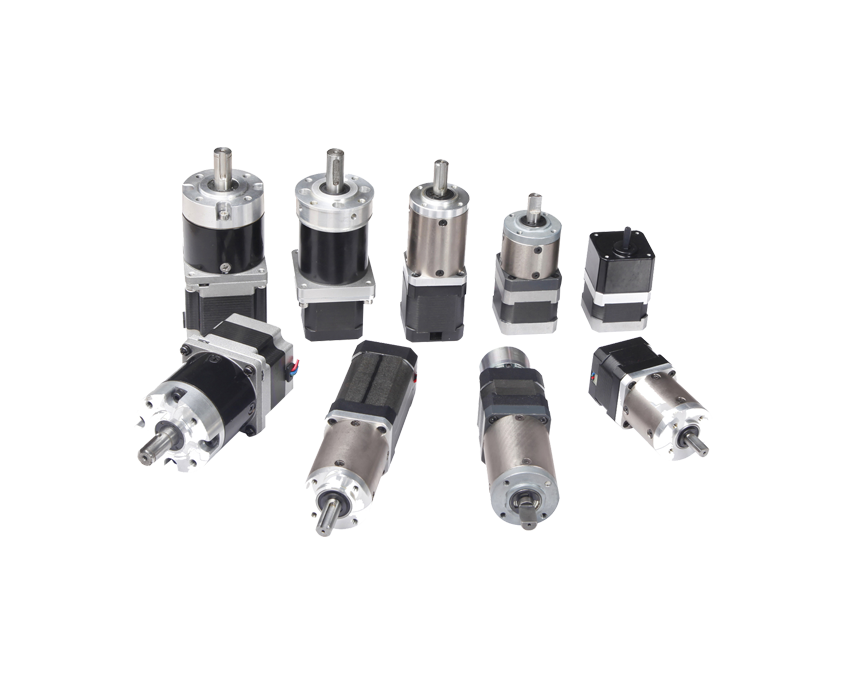
A geared stepper motor is a powerful combination of a standard brushless DC stepper motor and a mechanical gear reducer. While a standard stepper motor is prized for its open-loop positioning and high holding torque at low speeds, it often struggles with high inertia loads or the need for extremely fine resolution. By integrating a gearbox—be it planetary, spur, or worm gear—engineers can multiply the output torque and significantly improve the step resolution. This synergy allows for precise motion control in applications where a direct-drive motor would either stall or lack the necessary granularity for microscopic movements.
The fundamental physics behind this pairing involves the gear ratio. For instance, a 10:1 gear ratio reduces the motor's output speed by a factor of ten while simultaneously increasing the output torque by nearly the same factor, minus some efficiency losses. This makes geared stepper motors the go-to solution for heavy-duty automation, 3D printing extruders, and medical imaging equipment where reliability and power density are non-negotiable.
The primary driver for choosing a geared stepper is the need for torque that exceeds the motor's frame size. In space-constrained environments, using a smaller motor with a high-ratio gearbox is often more efficient than installing a massive NEMA 34 or 42 motor. This allows for compact designs without sacrificing the ability to move heavy structural components or actuate high-pressure valves.
Inertia matching is critical for system stability. If the load inertia is significantly higher than the motor rotor inertia, the system can become resonant and lose steps. Gearboxes reduce the "reflected" inertia seen by the motor by the square of the gear ratio. This stabilization allows the motor to control large loads with much smoother acceleration and deceleration profiles, preventing the dreaded "ringing" effect at the end of a move.

Selecting the right gearbox type is essential for matching the motor to its specific task. Different mechanical arrangements offer varying levels of precision, efficiency, and cost-effectiveness.
| Gearbox Type | Efficiency | Backlash Level | Best Use Case |
| Planetary | 90% - 95% | Low | High Precision / High Torque |
| Spur | 60% - 85% | Moderate | Cost-sensitive / Low Speed |
| Worm | 40% - 60% | High | Self-locking / Right Angle |
When integrating a geared stepper motor into a project, engineers must account for specific mechanical trade-offs that are not present in direct-drive systems:
Maintaining a geared stepper motor involves both electrical and mechanical oversight. If you notice a sudden decrease in positioning accuracy, the first step is to check the mechanical couplings between the gearbox and the load. Loose set screws are a common culprit for perceived "loss of steps" that are actually mechanical slips. Furthermore, checking for unusual noise or vibration can indicate worn gear teeth or insufficient lubrication. Ensuring the driver current is correctly tuned is also paramount; over-driving the motor can lead to excess heat which accelerates gear wear, while under-driving may cause the motor to stall against the internal friction of the gearbox.
Your email address will not be published. Required fields are marked *
Tel: +86 0579-86817938-836
Phone: +86 15258922705
E-mail: [email protected]
Add: No.2 Zengping Rd., Dongyang, Zhejiang, China
You can contact to me using this form.
Copyright © Zhejiang Dongzheng Motor Co.,Ltd. All Rights Reserved.
 DC Gear Motor Manufacturers