
 English
 русский
 日本語
日本語 Español
 Deutsch
 中文简体
中文简体Product Consultation
Your email address will not be published. Required fields are marked *




DC Gear Motors Guide: Types, Applications & Selection Tips
Jul 16,2026
Worm Gear Motor Explained: Why This Compact Powerhouse Is Used Everywhere
Jul 10,2026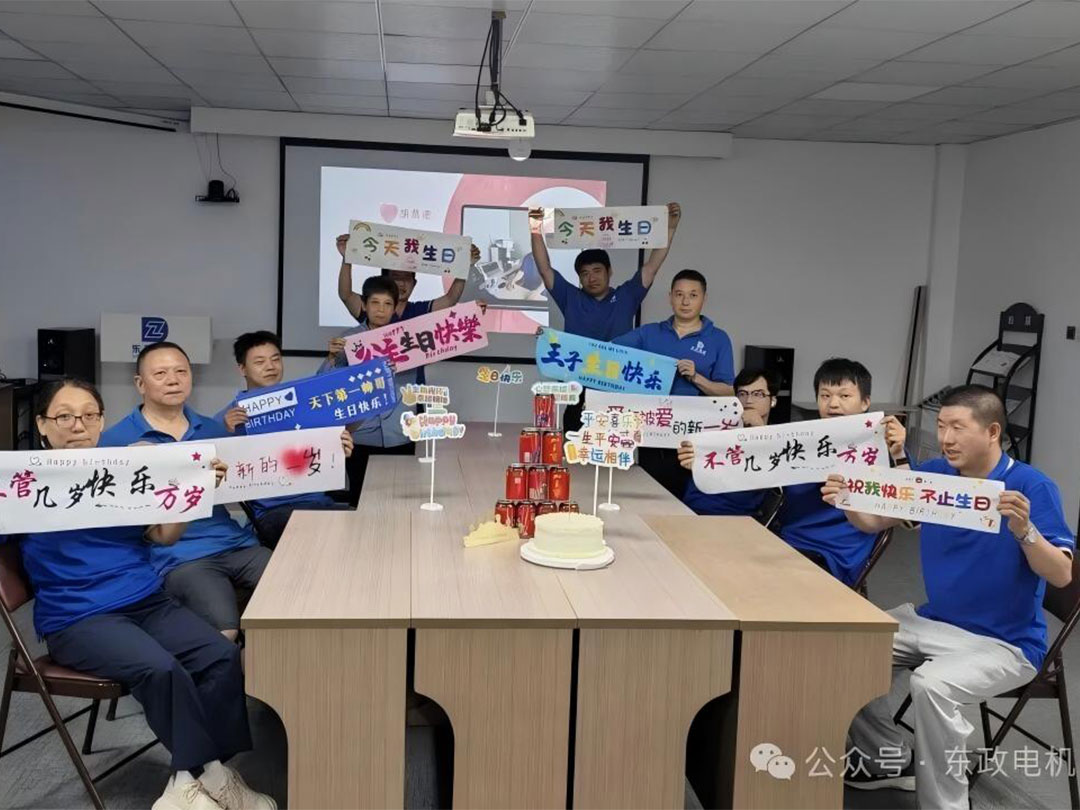
June birthday, growing towards the sun | The June employee birthday party of Dongzheng Electric Machinery came to a warm conclusion
Jun 05,2026Content
In the hum of a power tool, the precise movement of a conveyor belt, and the simple rotation of a car’s window mechanism, lies the heartbeat of a technology that has shaped the modern world: the brushed DC motor. While often overshadowed by newer, more complex alternatives, these electromechanical workhorses remain a fundamental force in industry and everyday life. Their story is one of enduring relevance, a testament to a design whose simplicity, reliability, and cost-effectiveness continue to make it indispensable.
A Brushed DC (Direct Current) motor is an internally commutated electric motor designed to run from a direct current (DC) power source. The name itself reveals its core characteristic: it uses physical “brushes”—typically made of carbon or graphite—to deliver current to a rotating component called the armature. This simple method of commutation, which reverses the current direction to maintain rotation, is the defining feature that differentiates it from its brushless counterparts. At its heart, the brushed DC motor is a converter, transforming electrical energy into precise mechanical rotation.
The journey of the brushed DC motor is intertwined with the very discovery of electromagnetism. Its principles were demonstrated by scientists like Michael Faraday in the 1820s. The first practical DC motors emerged in the 1830s, but their widespread adoption was hindered by the lack of a reliable DC power grid. The late 19th century, often called the “War of the Currents,” saw Thomas Edison championing DC power, which propelled the development and refinement of DC motors. These early motors powered the first electric streetcars and factory machinery, becoming the engines of the Second Industrial Revolution. While power transmission favored AC (Alternating Current) in the long run, the brushed DC motor secured its niche wherever batteries or controlled, variable-speed rotation were required, evolving over decades with better materials for magnets, brushes, and windings.
Despite being one of the oldest electric motor designs, the brushed DC motor has not been relegated to history books. Its importance today stems from a powerful combination of advantages. Its simplicity translates to low initial cost and ease of control—often requiring just a simple variable resistor or basic circuit to adjust speed. This makes it a go-to solution for a vast array of applications, from automotive accessories and industrial actuators to children’s toys and home appliances. While brushless DC (BLDC) motors offer higher efficiency and longer life in many high-performance applications, the brushed DC motor continues to thrive in cost-sensitive, high-volume, or less demanding scenarios where its straightforward operation and robust performance provide an unbeatable value proposition. It truly powers the pulse of modern industry, from the simplest of tasks to highly specialized roles.
The operation of a brushed DC motor is an elegant demonstration of electromagnetic principles. While its components are simple, their interaction creates continuous rotational motion. Understanding this process is key to appreciating the motor’s characteristics and applications.
Every brushed DC motor is built around four essential components that work in concert:
The motor operates on the fundamental law of magnetism: like poles repel, and opposite poles attract. Here’s the step-by-step process:
The performance of a brushed DC motor is defined by two key, interrelated relationships:
These predictable characteristics make brushed DC motors exceptionally easy to understand and control for a wide range of tasks.
While all brushed DC motors share the same core components and principles of operation, the way their magnetic fields are generated leads to distinct types with unique performance characteristics. The primary classification is based on the connection between the field windings (the electromagnets that create the stator field) and the armature circuit.
This is the most common and simplest type of brushed DC motor. Instead of using electromagnets, the stator field is generated by permanent magnets.
In a series-wound motor, the field windings are connected in series with the armature windings. This means the same current flows through both the stator field coils and the rotor armature.
In a shunt-wound motor, the field windings are connected in parallel (shunt) with the armature windings. The field coil receives a constant voltage, independent of the armature.
A compound motor is a hybrid design that combines features of both series and shunt configurations. It has both a series field winding and a shunt field winding.
| Motor Type | Field Winding Connection | Key Characteristic | Ideal Application |
|---|---|---|---|
| Permanent Magnet | N/A (Permanent Magnets) | Simple, linear control, good efficiency | Automotive accessories, appliances, toys |
| Series Wound | In Series with Armature | Very High Starting Torque | Hoists, cranes, traction motors |
| Shunt Wound | In Parallel with Armature | Constant Speed under Load | Machine tools, conveyors, pumps |
| Compound Wound | Both Series and Parallel | Balanced Torque and Speed Regulation | Heavy-duty industrial drives |
The true measure of the brushed DC motor’s success is its pervasive presence across a stunningly diverse range of sectors. From the cars we drive to the appliances in our homes, its unique blend of simplicity, controllability, and cost-effectiveness ensures its continued relevance. This section explores how these motors power innovation and routine operations alike.
Brushed DC motors are the silent workhorses of the modern automobile. Their ability to provide high torque at low speeds and be controlled with simple switches makes them ideal for numerous auxiliary functions.
In the industrial world, brushed DC motors are valued for their excellent torque characteristics and straightforward control, which are essential for automation and precision movement.
The brushed DC motor is a familiar presence in daily life, powering a wide array of devices that prioritize affordability and adequate performance.
Even in highly demanding fields, brushed DC motors find critical niches where their specific advantages are indispensable.
This widespread application across such varied industries underscores a key point: the brushed DC motor is not an obsolete technology, but a highly optimized solution for a vast spectrum of engineering challenges. Its role is defined by a practical balance of performance, cost, and simplicity.

A clear-eyed assessment of any technology requires understanding both its strengths and its weaknesses. The brushed DC motor’s enduring presence is a direct result of a favorable trade-off between its benefits and drawbacks for a vast number of applications. Knowing these parameters is key to selecting the right motor for the job.
The advantages of brushed DC motors are significant and directly tied to their fundamental design:
The very mechanism that gives the brushed DC motor its name is also the source of its primary limitations:
The natural comparison for a brushed DC motor is its more modern relative, the Brushless DC (BLDC) motor. The choice between them is a classic engineering trade-off:
| Feature | Brushed DC Motor | Brushless DC (BLDC) Motor |
| Control & Complexity | Simple, low-cost control electronics. | Requires complex, expensive electronic controller. |
| Cost | Lower initial cost. | Higher initial cost. |
| Maintenance & Lifespan | Limited lifespan due to brush wear; requires maintenance. | Very long lifespan; no brushes to replace; maintenance-free. |
| Efficiency | Lower (75-80% typical). Higher losses due to friction and electrical resistance. | Higher (85-90%+ typical). No brush friction losses. |
| Speed & Performance | Good low-speed torque; speed limited by commutation. | High speeds possible; excellent high-speed torque. |
| Electrical Noise | Generates significant EMI/RFI from sparking. | Very quiet operation electrically. |
The Verdict: Brushed DC motors win in applications where low initial cost, simplicity, and ease of control are the primary drivers. BLDC motors are superior where high efficiency, low maintenance, long life, high speed, and precise control are more critical than upfront cost.
To assume that the brushed DC motor is a static technology would be a mistake. While its core principle remains unchanged, continuous innovation is focused on mitigating its limitations, enhancing its capabilities, and ensuring its relevance in an increasingly smart and eco-conscious world. The future of the brushed DC motor is not about reinvention, but about refinement and integration.
The primary battlefield for innovation lies in addressing the motor’s most famous drawbacks: brush wear and electrical noise.
The simplicity of controlling a brushed DC motor makes it an ideal candidate for integration into the Internet of Things (IoT) and smart industrial systems (Industry 4.0).
In an era focused on sustainability, the brushed DC motor is being evaluated through a green lens.
The trajectory is clear: the brushed DC motor is evolving from a simple commodity component into a more reliable, connected, and efficient actuator, ensuring it will continue to power the pulse of industry for decades to come.
The brushed DC motor stands as a testament to the enduring power of elegant engineering. From its foundational role in the Industrial Revolution to its quiet persistence in the digital age, it has proven to be far more than a relic; it is a continuously evolving technology that remains deeply embedded in the fabric of modern innovation.
As we have explored, the significance of the brushed DC motor is rooted in a powerful combination of attributes. Its simple construction, based on the timeless principles of electromagnetism, offers unparalleled cost-effectiveness and ease of control. This has secured its place as the driving force behind countless applications, from the automotive industry and industrial automation to the consumer goods we use daily. While it has limitations in lifespan and efficiency compared to brushless alternatives, its straightforward operation and low initial cost create an unbeatable value proposition for a vast range of tasks. It is a technology that prioritizes practicality and accessibility, making automated motion possible on a massive scale.
The future of the brushed DC motor is not one of obsolescence but of specialization and evolution. It will continue to be the dominant solution for cost-driven, high-volume applications where simplicity and reliability are paramount. The ongoing advancements in materials science—leading to longer-lasting brushes and more efficient designs—will further solidify this position.
Looking ahead, its role will increasingly be defined by smart integration. As sensors and predictive maintenance capabilities become standard, the brushed DC motor will evolve from a simple component into a connected data point within the Internet of Things and Industry 4.0 ecosystems. This will maximize its uptime and value in industrial settings.
Ultimately, the brushed DC motor will continue to coexist with and complement more advanced motor technologies. Its story is one of adaptation. It may no longer be the only option for high-performance applications, but its unique blend of simplicity, control, and affordability ensures that it will continue to power the pulse of modern industry for the foreseeable future, proving that sometimes, the most effective solution is also one of the most straightforward.
Your email address will not be published. Required fields are marked *
Tel: +86 0579-86817938-836
Phone: +86 15258922705
E-mail: [email protected]
Add: No.2 Zengping Rd., Dongyang, Zhejiang, China
You can contact to me using this form.
Copyright © Zhejiang Dongzheng Motor Co.,Ltd. All Rights Reserved.
 DC Gear Motor Manufacturers