


 English
 русский
 日本語
日本語 Español
 Deutsch
 中文简体
中文简体Product Consultation
Your email address will not be published. Required fields are marked *




June birthday, growing towards the sun | The June employee birthday party of Dongzheng Electric Machinery came to a warm conclusion
Jun 05,2026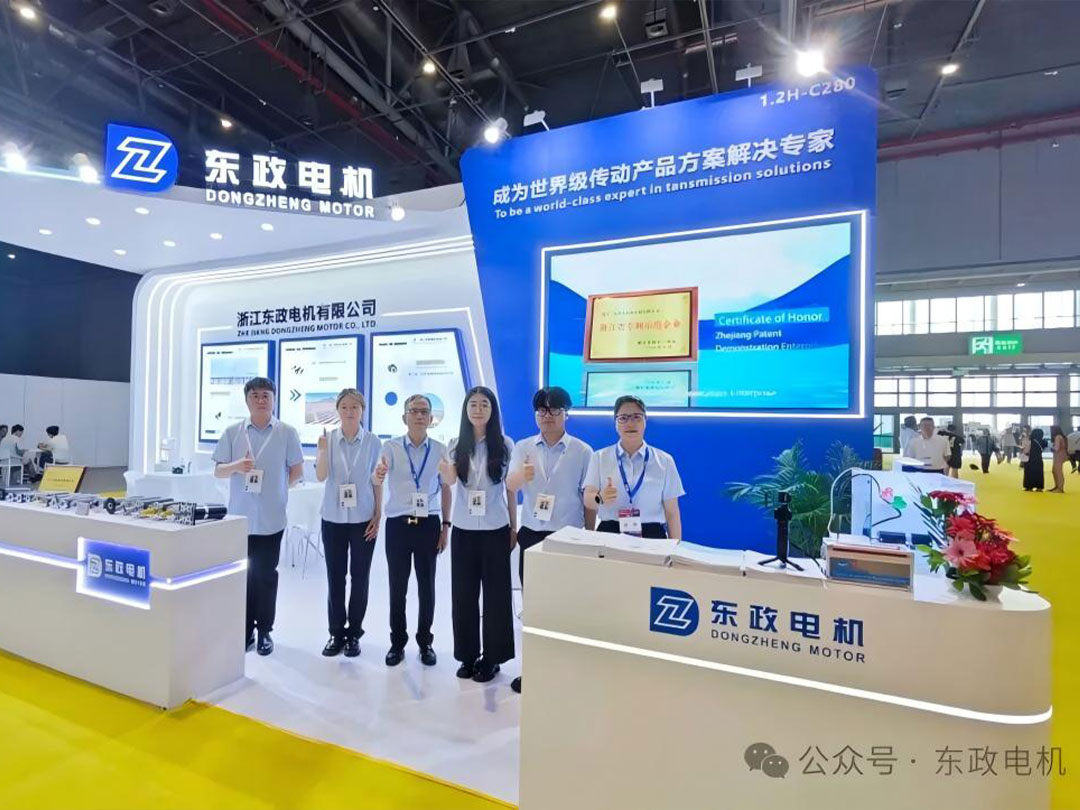
Dongzheng Motor participates in the 19th (2026) International Solar Photovoltaic and Smart Energy (Shanghai) Conference and Exhibition
Jun 03,2026
Prevent through drills, prevent before it "ignites" | Dongzheng Motor's fire emergency drill concludes successfully
May 30,2026Content
Every time a boom barrier lifts for a vehicle, a turnstile flap swings open for a badge tap, or a smart lock deadbolt retracts for a fingerprint match, a gear motor is doing the physical work. Access control systems are fundamentally about converting an electronic authorization signal into a precise, reliable mechanical action — and that conversion is entirely the gear motor's job. Get the motor right, and the system operates smoothly for years under high-cycle demands. Get it wrong, and no amount of software sophistication will compensate for a drive unit that fails, jams, or moves too slowly at a busy entrance.
Gear motors for access control systems face a specific and demanding set of requirements that general-purpose motors don't always satisfy. They must produce enough torque to actuate locks, barriers, and gate arms — often against spring return forces or under load — while doing so quietly, quickly, and reliably across tens of thousands of cycles per year. They typically operate on low DC voltages (5V, 12V, 24V) to integrate with control boards and battery backup systems. And in many installations, they must function across a wide temperature range, resist moisture ingress, and operate without regular maintenance for years at a time.
This article covers the gear motor types used across the main access control hardware categories, the specifications that actually determine performance in each application, and the practical selection decisions that separate a durable installation from a costly maintenance problem.
Access control hardware spans a wide range of mechanical complexity and physical scale — from a tiny smart lock cylinder to a full-width parking barrier gate. Each application has its own torque profile, speed requirement, duty cycle, and environmental exposure. Understanding these differences is the starting point for specifying the right drive motor.
Smart lock gear motors are micro-scale drive units embedded directly in the lock body. They must retract or extend a deadbolt or latch mechanism, typically through a clutch-coupled gear train that disengages for manual override. Typical output torque requirements range from 5 to 15 kg·cm, with output speeds of 10–60 RPM. The operating voltage is almost universally 3V to 6V (battery-powered) or 12V (wired installations). Because the motor operates in direct contact with the user experience — a slow or noisy unlock is immediately perceptible — noise levels and actuation speed are critical specifications alongside torque. Duty cycle is low: most residential smart locks perform 10–30 cycles per day, giving the motor ample thermal recovery time.
Motorized mortise locks and electric strike plate actuators are used in commercial door access control — office building entrances, server rooms, and fire exit doors. These applications require higher torque than residential smart locks (often 15–30 kg·cm), the ability to operate in both fail-safe (power-off unlocks) and fail-secure (power-off locks) configurations, and reliable operation across thousands of cycles per day in high-traffic facilities. Motors driving motorized lock cylinders must also be resistant to electromagnetic interference, since they share enclosures with the card readers and control boards that generate RF signals.
Pedestrian access control — subway turnstiles, office building flap barriers, and security checkpoint tripods — is one of the most demanding duty cycles in the access control world. A busy metro station turnstile may execute 2,000 to 5,000 cycles per day. The gear motor must open and close the barrier flap or arm quickly (typically 0.5 to 1.5 seconds per cycle), quietly (indoor pedestrian environments are noise-sensitive), and with enough torque to resist forced entry attempts. Brushless DC gear motors are the standard choice for high-cycle pedestrian barriers, with 24V or 48V operating voltage, Hall-effect position feedback for precise arm positioning, and thermal protection for continuous duty operation.
Boom barrier gates at parking facilities, toll plazas, and gated communities operate boom arms of 3 to 6 meters in length. The motor must raise and lower the arm quickly (typically 1.5 to 4 seconds) against gravity and wind loading, with enough holding torque to keep the arm horizontal in open position. DC gear motors in the 12V–48V range with output torques from 20 to over 100 N·m are common, often with counterweighting or spring assistance to reduce the effective load the motor must handle. Heavy-duty outdoor installations require IP54 or IP65 motor enclosures and operating temperature ranges of at least −20°C to +70°C.
Residential and commercial vehicle gate operators drive heavy steel or aluminum gates along tracks (sliding) or on hinges (swing). Gate weights range from 50 kg for a light residential swing gate to over 1,000 kg for a heavy industrial sliding gate. Drive gear motors for gate operators are correspondingly powerful — typically 24V or 48V DC units with output torques measured in tens to hundreds of N·m, often using rack-and-pinion or chain drive systems to translate motor rotation into gate movement. High-cycle industrial gate operators require continuous duty-rated motors with integrated thermal overload protection and fail-safe clutch mechanisms to prevent damage if the gate strikes an obstruction.
The gear reduction topology — not just the motor base — defines the performance character of a gear motor for access control. Three gear types dominate: worm, planetary, and spur. Each has a specific role in the access control world based on its torque density, self-locking behavior, noise level, efficiency, and cost profile.
Worm gear motors transmit motion through a helical screw (the worm) driving a mating worm wheel at 90 degrees. The geometry of worm drives creates a natural self-locking effect at higher reduction ratios: the worm can drive the wheel, but the wheel cannot back-drive the worm. For access control, this is a critical safety property. A boom barrier or gate arm that holds its position mechanically when the motor is de-energized — without needing an active brake — reduces the risk of uncontrolled movement during power interruptions and simplifies the motor control circuit. Worm gear motors are the dominant choice for vehicle gate operators and boom barriers for exactly this reason.
The trade-off is efficiency. Sliding contact between the worm and wheel introduces significant friction losses, and worm gear motor efficiency typically ranges from 40% to 75% depending on reduction ratio and lead angle. For battery-backup and solar-powered access control installations, this efficiency penalty is a real constraint and may favor planetary alternatives with added electromagnetic brakes for position holding.
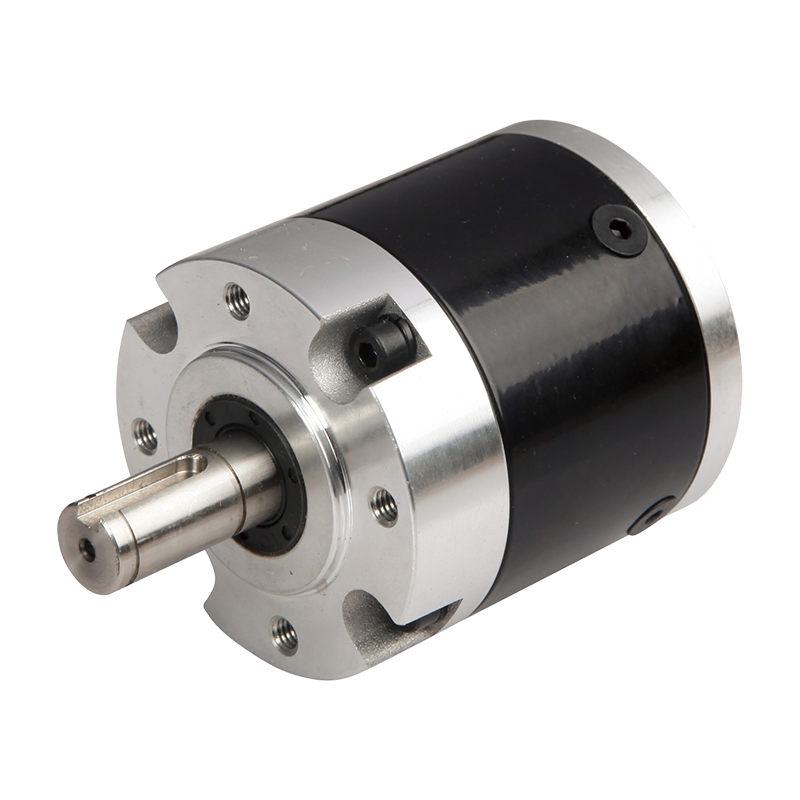
Planetary gear motors distribute load across three or more planet gears simultaneously, achieving high torque density in a compact diameter — typically 2 to 3 times the torque capacity of a spur gear motor of equivalent size. They operate at 85–97% efficiency per stage, making them energy-efficient for high-cycle pedestrian access control where cumulative power consumption matters. Brushless planetary gear motors with Hall-effect sensors are the standard drive system for flap barrier and swing turnstile mechanisms in commercial and transit applications.
Planetary gear motors do not self-lock, which means barrier and gate applications require either an active electromagnetic brake or a supplementary locking solenoid for position holding. This adds component cost and control complexity but also enables more sophisticated motion profiles — soft-start, soft-stop, and variable speed — that improve user experience and reduce mechanical shock in high-cycle systems.
Spur gear motors are the most cost-effective option for low-torque, intermittent-duty access control applications — primarily smart door locks, electronic latches, and light-duty actuators. Their simple parallel-shaft construction keeps manufacturing cost low, and multi-stage spur gear trains achieve reduction ratios from 10:1 to over 200:1 in compact packages suitable for embedding in lock cylinders. Efficiency per stage is 90–95%, adequate for battery-powered smart locks where the motor runs for less than one second per actuation cycle.
The limitation for access control is noise and load capacity. Single-gear-mesh load sharing means spur gears are noisier than planetary alternatives at comparable speeds, and peak torque is limited by the strength of the individual gear mesh. For high-security deadbolt applications requiring 15+ kg·cm of continuous output torque or for high-cycle commercial door locks, a planetary gear motor is generally preferred over a spur alternative.
| Gear Type | Self-Locking | Efficiency | Torque Density | Noise Level | Best Access Control Use |
|---|---|---|---|---|---|
| Worm | Yes (high ratios) | 40–75% | Moderate | Low–Moderate | Boom barriers, gate operators |
| Planetary | No | 85–97% | High | Moderate | Turnstiles, flap barriers, swing gates |
| Spur | No | 90–95% | Low–Moderate | Moderate–High | Smart locks, electronic latches |
The motor base — brushed or brushless DC — is the second major selection decision after gear type. Both can power access control hardware effectively, but their differences in lifespan, noise, control complexity, and cost make one a clearly better fit depending on the application's duty cycle and budget.
Brushed DC motors use carbon brushes and a mechanical commutator to deliver current to the armature. They are simple to control — a basic H-bridge driver and a PWM signal are sufficient — and they are significantly cheaper than brushless equivalents. For low-duty-cycle access control applications like residential smart locks (10–30 actuations per day) and intermittent barrier gates, brushed DC gear motors deliver excellent value. Their typical service life of 500 to 3,000 hours at rated load is adequate for applications where the motor accumulates minimal run time per day.
The limitations appear in high-cycle environments. Brush wear accelerates with operating temperature and current, generating carbon dust inside the motor housing and gradually degrading commutation quality. In a busy office building's motorized lock or a high-traffic turnstile, brush replacement or full motor replacement may become a recurring maintenance cost within 2–3 years. Additionally, brush sparking generates electromagnetic interference (EMI) that can disrupt nearby RFID readers and access control boards — a design concern that must be managed with RF shielding or filtering.
Brushless DC (BLDC) gear motors replace the mechanical commutator with electronic commutation via a motor controller and Hall-effect position sensors. Without brushes, there is no contact wear — service life exceeds 10,000 hours in typical access control duty cycles, and no carbon dust accumulates inside the drive assembly. Efficiency is 85–95%, generating less heat for equivalent mechanical output and reducing thermal stress on the gearbox lubricant. For indoor pedestrian access control where EMI compliance matters and noise must be minimized, brushless gear motors deliver both quieter operation and cleaner electrical behavior.
The cost premium is real: brushless gear motors with controllers typically cost 30–50% more than equivalent brushed units. The additional control complexity — a brushless motor requires a dedicated driver board with commutation logic — also adds to integration time and BOM cost. For high-volume consumer smart lock manufacturing, this cost difference often pushes designs toward brushed motors. For commercial infrastructure with 24/7 operation and high maintenance costs, the brushless option's lower total cost of ownership usually wins the business case.
Reading a gear motor datasheet for an access control application requires understanding which specifications are actually critical for reliable operation versus which are marketing figures measured under ideal lab conditions. The following parameters deserve close attention in every access control motor selection.
Rated torque is the continuous safe working torque — the figure your application load must not exceed for reliable long-term operation. Stall torque is the maximum force the motor produces when it is completely stopped and is typically 5–10 times the rated torque. A practical selection rule for access control: the application's peak torque demand, including spring return forces and worst-case environmental resistance (low temperature increases lubricant viscosity and mechanism friction), should not exceed 30% of the motor's stall torque. Operating consistently above 50% of stall torque causes overheating and premature failure.
Output speed determines how fast the access control mechanism operates — which directly affects throughput and user experience. A flap barrier that takes 3 seconds to open frustrates users and creates queuing problems at busy entrances. A smart lock that takes 2 seconds to retract the deadbolt feels slow and unresponsive. Calculate required output RPM from the mechanism's geometry and target actuation time, then verify the motor's rated speed at load — not just the free-run no-load speed, which is always faster than the loaded operating speed.
Access control gear motors typically operate at 5V, 6V, 12V, or 24V DC. Matching voltage to the system power architecture avoids the cost and complexity of additional DC-DC conversion. Current draw at rated load determines wire gauge requirements, driver current rating, and battery capacity for backup power. Always verify stall current — the peak current when the motor is first energized or jams — and ensure the motor driver and wiring can handle this surge without damaging the driver FETs or tripping the overcurrent protection.
Duty cycle is the fraction of time a motor can operate continuously without exceeding safe thermal limits. A motor rated for 25% duty cycle can run for 15 minutes of every hour; a 100% duty cycle motor is designed for continuous operation. Matching duty cycle to actual application demand is critical: a motor rated for intermittent duty that drives a high-traffic turnstile operating 90% of the time will overheat and fail prematurely. High-cycle pedestrian access control requires continuous-duty-rated motors with integrated thermal protection cutouts.
Outdoor access control installations — vehicle gate operators, parking barriers, exterior building entrances — require motors with at minimum IP54 protection (dust-protected, splash-resistant). For installations exposed to rain, hose-down cleaning, or high humidity environments, IP65 or IP67 is the appropriate specification. Operating temperature range should cover the full ambient range for the installation site: standard motors cover 0°C to 50°C; outdoor-rated motors for harsh climates should be specified to −20°C to +70°C or beyond. Low-temperature performance is particularly important because lubricant viscosity increases dramatically below 0°C, raising the torque required to move mechanisms and increasing starting current draw.
Access control gear motors in office buildings, hospitals, hotels, and residential environments must operate quietly. Noise levels below 45 dB measured at 1 meter are generally required for indoor applications. Factors affecting noise include gear type (worm and helical are quieter than spur), gear material (plastic final-stage gears damp mesh noise), motor type (brushless is quieter than brushed), and lubrication (correct viscosity grease at the gear mesh is the most effective field-level noise management tool).
One of the most important — and often misunderstood — design considerations for access control gear motors is their behavior during power failure. Every access point must be specified as either fail-safe (unlocks when power is lost) or fail-secure (remains locked when power is lost), and the gear motor's design must support the chosen mode.
Fail-safe design is mandatory for life safety exits — fire egress doors must unlock when power fails so occupants can escape. This is typically achieved with spring-return mechanisms where the gear motor works against a spring to hold the locked state; power loss releases the spring and unlocks the door. The motor in a fail-safe system must be sized to continuously hold the mechanism against spring tension when locked — a sustained torque load that defines the motor's continuous duty requirement.
Fail-secure design keeps doors locked during power outages — appropriate for server rooms, vaults, and security perimeters where unauthorized access during an outage is a greater risk than occupant egress. Worm gear motors are naturally suited to fail-secure gate applications because their self-locking property holds the barrier in position without power. For electronic locks, fail-secure behavior requires either a solenoid-engaged locking pin or an electromagnetic brake on the motor shaft.
Battery backup integration is the complementary strategy: keeping the gear motor operational during mains power failure. Motor selection for battery-backed access control must account for reduced battery voltage (a 12V lead-acid battery discharges to 10.5V under load), which reduces motor torque and speed, and must ensure the motor can still complete its actuation cycle reliably at minimum battery voltage.
A gear motor for access control does not operate in isolation — it is part of a system that includes a control board, credential reader, power supply, and often position sensors and safety devices. How the motor interfaces with these components determines the reliability and precision of the entire system.
Most access control gear motors are driven by H-bridge motor driver ICs or modules that allow bidirectional control — running the motor in both directions to open and close the barrier or extend and retract the bolt. PWM (pulse-width modulation) control of motor speed enables soft-start and soft-stop motion profiles that reduce mechanical shock, extend gear life, and improve the user experience of barriers and turnstiles. When specifying a motor driver, match its continuous current rating to the motor's rated current and its peak current capability to the motor's stall current.
Most access control actuators require the control system to know when the mechanism has reached its fully open or fully closed position. Mechanical limit switches at end-of-travel positions are the simplest approach and are reliable in low-cycle applications like residential gate operators. For high-cycle or precision applications — flap barriers, smart locks — Hall-effect sensors on the motor shaft or final output stage provide quadrature encoder-equivalent position feedback without the contact wear of mechanical switches. This feedback enables precise position control, stall detection (when the mechanism jams against an obstacle), and accurate cycle count for predictive maintenance.
When an access control mechanism jams — a gate arm hits an obstacle, a bolt encounters a misaligned strike plate — the motor attempts to continue driving against a stalled load. Without protection, motor current spikes to stall current levels and sustained overheating rapidly damages motor windings and gear lubricant. Access control motor controllers should implement current monitoring with configurable overcurrent thresholds that cut motor drive within milliseconds of detecting a jam condition. Selecting a motor with built-in thermal protection (a PTC thermistor or bimetallic thermal cutout) adds a hardware safety layer independent of the controller's software.
Pulling the selection process together into a practical sequence helps avoid both under-specifying (failures in the field) and over-specifying (unnecessary cost). Work through these decisions in order for each access control application.
Access control gear motors in commercial installations are often inaccessible for routine service — embedded in lock cylinders, sealed inside barrier housings, or mounted in overhead gate operators. Designing for longevity from the specification stage is more practical than planning for regular maintenance.
Lubrication is the single most influential factor in gear motor longevity. Factory-applied grease loses viscosity over time, especially in high-temperature or high-cycle applications. Specifying sealed gear motor housings with lifetime-lubricated bearings reduces the maintenance burden. For gear motors in accessible housings that do permit maintenance access, annual inspection and regreasing with the manufacturer-specified lubricant (synthetic grease for plastic gears, lithium-based for metal gear trains) can extend service life significantly beyond the base rating.
Cycle count monitoring enables predictive maintenance before failure. Modern access control systems can log actuation events at the controller level, providing a cumulative cycle count for each motor in the system. When a motor approaches the manufacturer's rated cycle life — typically 100,000 to 500,000 cycles for commercial-grade access control motors — scheduling proactive replacement during a planned maintenance window avoids the cost and disruption of an unplanned failure at a security-critical entry point.
Environmental sealing prevents the most common premature failure mode: contamination. Moisture ingress corrodes motor windings and bearings; dust accumulation clogs gear meshes and accelerates wear. Regularly inspecting shaft seals and housing gaskets on outdoor access control motors, and replacing degraded seals before they allow ingress, costs a fraction of a motor replacement and the associated access point downtime.
Your email address will not be published. Required fields are marked *
Copyright © Zhejiang Dongzheng Motor Co.,Ltd. All Rights Reserved.
 DC Gear Motor Manufacturers